

Challenging the pretension of a single reason: the dance between social coherence, individual diversity, and the constant redefinition of “normal”.
By Claudia Benítez
HoyLunes – Throughout our development, we have sought a rational structure that allows us to understand and construct our reality, as well as predict our behavior. We have attempted this through logical systems that promise order, predictability, and explanation. However, our daily experience reveals that we do not respond to a single, defined logic, but rather to a complex network of factors that intersect and, often, contradict one another. Emotions, social contexts, previous experiences, and cultural frameworks constantly interact in our decisions. In this scenario of diversity and instability, the notion of normality emerges as a necessity for collective survival rather than as an objective truth.
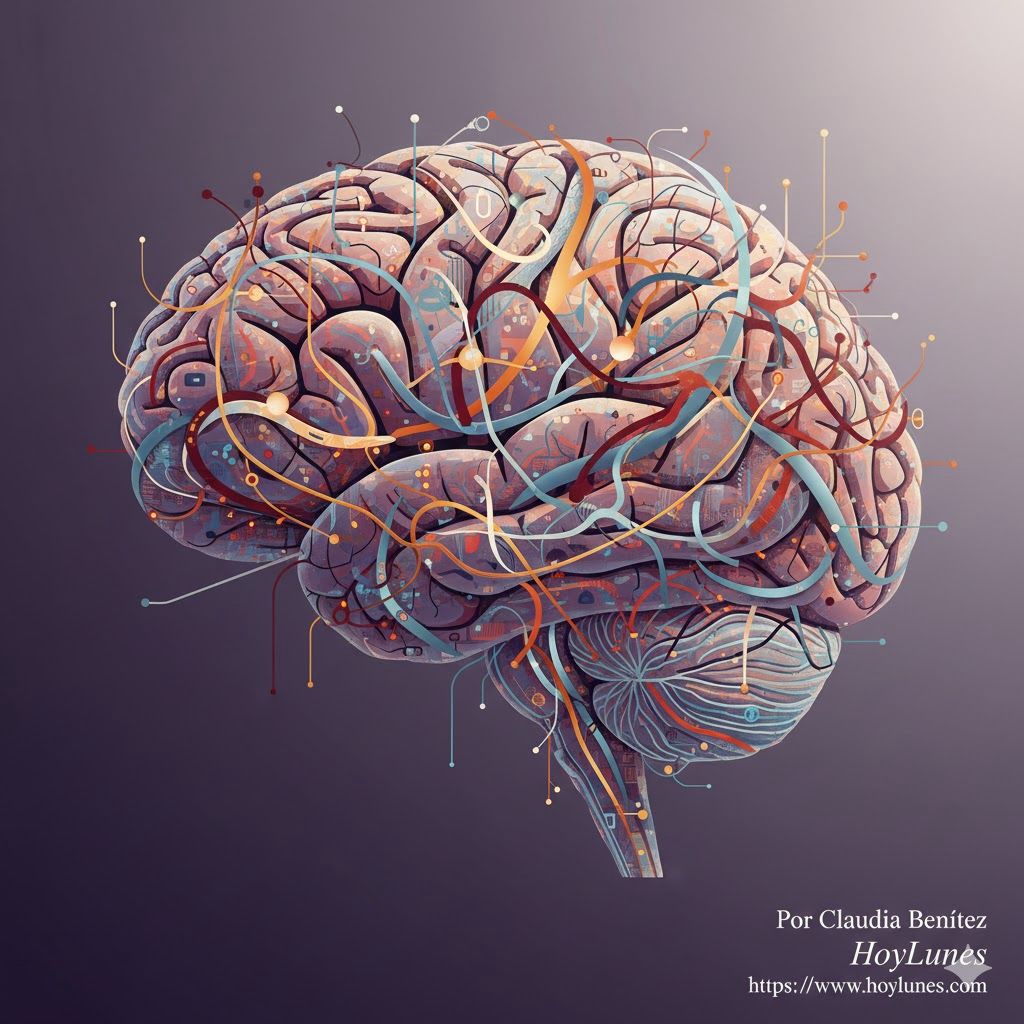
We tend to assume that acting logically implies making decisions that are coherent, stable, and predictable, ignoring the changing nature of the human being. Nonetheless, one need only observe our own actions to notice the contrary. The same person can firmly defend an idea and, in another situation, act in an opposite manner without necessarily feeling an internal contradiction. This does not constitute a failure of human thought, but rather an expression of its complexity. Each individual organizes their internal world in a unique way, with priorities, values, and ways of interpreting reality that cannot be reduced to a universal scheme. Claiming a single valid logic not only oversimplifies human nature but can also foster misunderstanding and erroneous judgment of those who think or act differently.
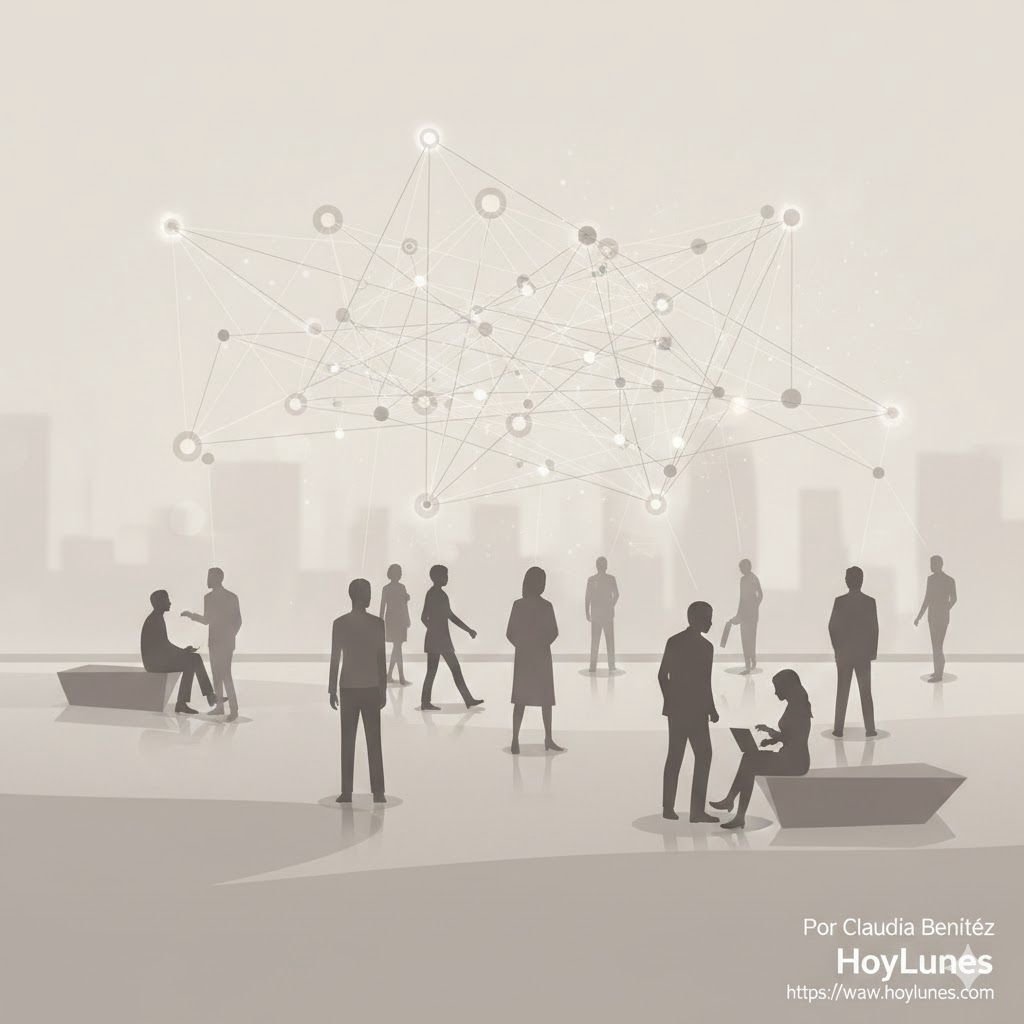
In social life, where behaviors are multiple and often contradictory, a shared frame of reference becomes necessary to reduce uncertainty and facilitate interaction. In this context, logic ceases to be solely an individual process and articulates itself as a norm. The idea of normality functions as an implicit collective agreement that allows for coexistence: it does not accurately describe who individuals are, but rather how they should behave and reflect so that life in a community is possible.
Social life demands certain stable patterns—objectives, tacit norms, and common values—that translate individual complexity into behaviors understandable to others. In this sense, normality, understood as common sense or social logic, operates as a tool for relational coherence.

Furthermore, logic does not always occupy a central place in our choices. Fear, desire, intuition, or habit can carry more weight than any structured reasoning. Frequently, we rationally justify a decision only after having made it, constructing an explanation that grants coherence to that which was born from non-logical impulses. This phenomenon highlights that logic is not necessarily the engine of action, but rather a subsequent tool to provide it with meaning.
This process is not devoid of tensions. What is considered normal in one historical moment or specific culture can become problematic in another. Normality is neither fixed nor universal; it is continually redefined according to the needs of the group. When it becomes inflexible, it runs the risk of becoming a mechanism of exclusion, labeling as ill or pathological that which deviates from the dominant consensus, even when such deviation is a legitimate expression of human diversity.
The human being is not an equation with a single solution. We are dynamic, contradictory, and changing beings, whose richness lies precisely in not obeying a rigid logic. Recognizing this multiplicity does not eliminate the value of reason but places it in its proper stead: as one part of what we are, and not the totality.
Thus, we must not confuse logic with truth or with nature.
Logic is nothing more than an intellectual procedure to justify reality and action; a social construct oriented toward sustaining the minimum coherence necessary for life in society, always as an unstable compromise between collective obedience and the development of thought. Recognizing that we do not respond to a single logic allows us to question the limits of the normal without destabilizing coexistence.
Understanding this opens the possibility for more flexible communities, capable of integrating difference without renouncing order, understanding that social coherence does not demand homogeneity, but rather agreements that are always subject to revision.

#HoyLunes #ClaudiaBenítez #ComplejidadHumana #MásAlláDeLaLógica #NormalidadEnCuestión #PensamientoCrítico #CoherenciaSocial #FilosofíaCotidianal #HoyLunesReflexiona